November 15, 2026 · 6 min read
Internal linking strategy for 2026: crawl budget and anchor text
A practical internal linking framework covering crawl depth, anchor text variation, and orphan page cleanup for sites of any size.
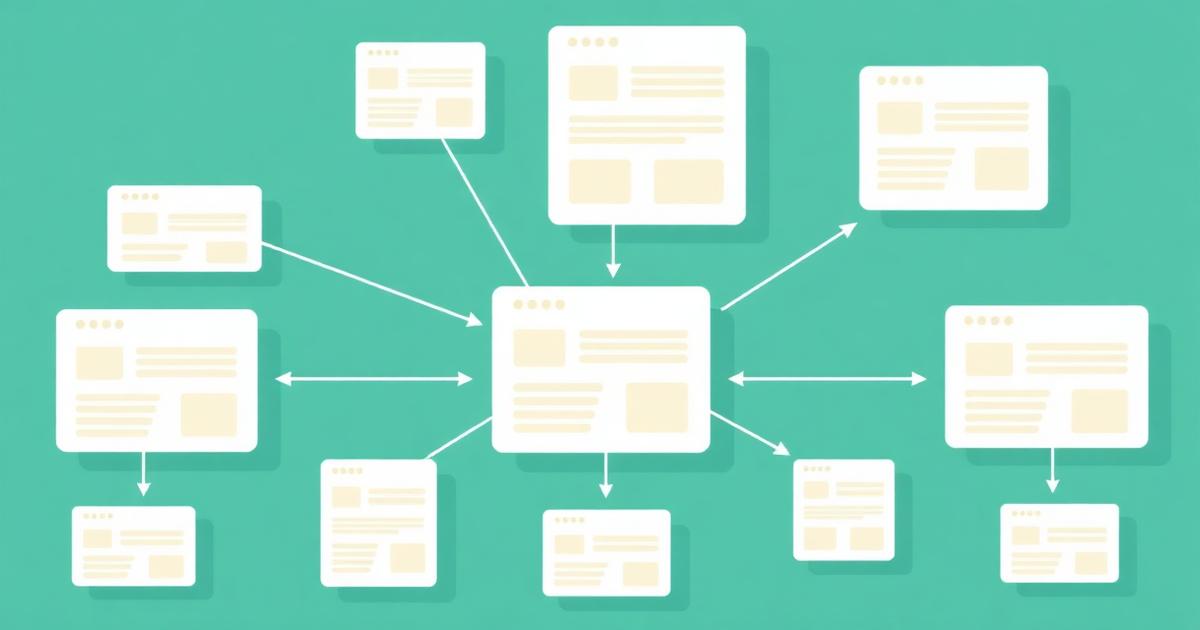
A client's blog had 340 published posts and a homepage linking to exactly twelve of them. Everything else was reachable only through a paginated archive that went eighteen pages deep, meaning a crawler — and a human — had to click through seventeen intermediate pages to reach the oldest content. After restructuring internal links around topic hubs instead of chronological pagination, organic traffic to that older content rose noticeably within two months, with no new content published at all. The content had been fine the entire time; it just wasn't reachable.
Crawl depth matters more than most site owners realize
Crawl depth is the number of clicks from your homepage to a given page. Search engine crawlers allocate limited attention to any site, especially larger ones, and pages buried five or six clicks deep get crawled less frequently and indexed more slowly than pages sitting two or three clicks from the homepage. Restructuring navigation and internal links to flatten this depth, rather than relying purely on chronological pagination, is one of the highest-leverage technical changes available on a content-heavy site.
Build topic hubs instead of relying on tags alone
A pillar page that comprehensively covers a broad topic, linking out to a dozen more specific supporting articles, gives both users and crawlers a clear path through related content that a generic tag archive doesn't provide. The pillar page absorbs authority from external links pointing at it and redistributes that authority to the supporting articles through direct, contextual internal links — something a chronological or alphabetical archive page does far less effectively.
Anchor text needs genuine variation
Linking to the same target page with the identical anchor text every time — always "click here" or always the exact same exact-match phrase — provides less useful signal to search engines than natural variation that still clearly describes the destination. Mixing exact-match, partial-match, and natural-language anchors across different source pages reads as organic rather than manipulated, which matters increasingly as algorithms get better at detecting unnatural link patterns.
Finding orphan pages before they become a problem
An orphan page has no internal links pointing to it at all, reachable only through a direct URL or a sitemap. Crawl your own site with a tool like Screaming Frog and cross-reference the results against your full published URL list — any page appearing in your list but not turned up as a link target during the crawl is orphaned and effectively invisible to normal site navigation, regardless of its actual content quality.
New content should link back into your existing archive, not just forward
It's common to link a new post out to relevant older posts, but the reverse matters just as much: going back and adding a link from a handful of relevant older, already-indexed pages to a newly published one gives that new page an immediate internal-link signal instead of waiting for it to accumulate links organically over months. This is a five-minute habit per new post that compounds meaningfully over a year of consistent publishing.
Don't let your navigation menu do all the linking work
A site relying entirely on a static top navigation menu for internal linking misses the much stronger signal that comes from contextual, in-content links placed where they're topically relevant to the surrounding text. A link inside a paragraph, next to related words, carries more topical relevance signal than the same link sitting in a generic sidebar or footer that appears identically on every page of the site.
Breadcrumbs help both users and crawlers understand hierarchy
Breadcrumb navigation showing a page's position within your site's category structure gives crawlers an explicit hierarchy signal and gives users an easy way to move up a level without hitting the back button repeatedly. Implementing breadcrumbs with the matching BreadcrumbList structured data also makes them eligible to appear directly in search results, which improves the perceived relevance of your listing.
A link audit worth doing quarterly
Beyond finding orphans, periodically export every internal link on your site and check for links pointing to redirected or now-404 URLs — these accumulate naturally as content gets updated, merged, or removed over time, and each one wastes a small amount of the crawl budget and topical signal that a working link would have passed along instead.
How many internal links is too many on one page
There's no hard cap, but a page with hundreds of internal links dilutes the topical signal each individual link passes, and it becomes genuinely harder for a reader to identify which links actually matter. A general guideline of somewhere between twenty and a hundred contextual links on a long-form page, depending on length, keeps the signal meaningful without looking like a link farm.
Related and "you might also like" modules need to be relevant, not just recent
An automated "related posts" widget that surfaces content purely by recency rather than topical similarity adds link volume without adding relevance, and search engines can tell the difference over time. A module driven by shared tags, categories, or even a simple keyword-overlap check produces measurably more useful internal links than one driven by publish date alone.
Questions about internal linking mechanics
Does the number of internal links pointing to a page directly boost its ranking? Not directly in a simple linear way, but pages with more contextual internal links tend to get crawled more often and are seen as more central to the site's structure, which correlates with better indexing and often better rankings over time.
Should I use nofollow on internal links ever? Generally no — nofollow is meant for untrusted or paid external links; applying it to your own internal links blocks link equity from flowing to pages you actually want indexed and ranked.
How do I prioritize which orphan pages to fix first? Start with orphans that already have external backlinks pointing at them or meaningful historical traffic, since those represent existing value that's currently being wasted by the lack of internal connection.